
An audiologist tests the 5 best-selling hearing aids in Singapore — and reveals why you pay up to S$4,000 for technology that costs S$380
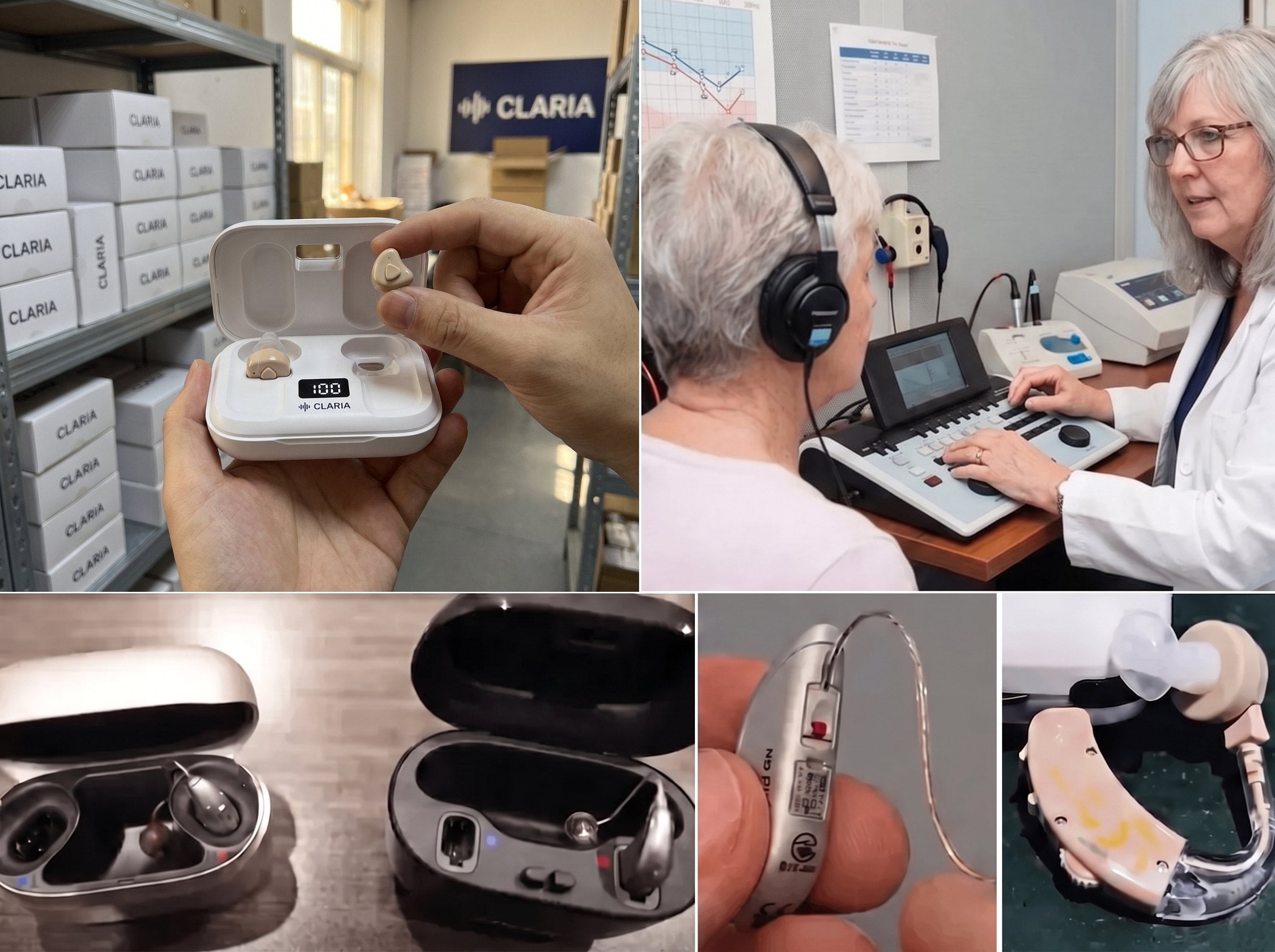
In thirty years as an audiologist — in public hospitals, in hearing chains like Amplifon and in private clinics — almost nobody has walked into my room alone to tell me "I can't hear well any more".
They come with someone. And it is almost always the daughter or the son who notices first: the TV volume getting louder, the unanswered phone calls, the father who smiles at Sunday lunch but no longer joins in.
I have fitted hearing aids for thousands of people. But I had never truly compared what people get for their money at each price level.
Then I saw the purchase invoices: devices sold at S$4,000 cost the big brands S$380 to make. I wanted to investigate.
I contacted 50 former patients — people who left without a solution because they could not afford it — and for six months we tested every alternative available. The results explain why so many seniors in Singapore are stuck between impossible options.
First: your father is not "ignoring you"
There is a misunderstanding that hurts family relationships. People think that someone losing hearing simply stops hearing sounds. In most cases that is false: he hears perfectly well that you are speaking — but he can no longer tell the words apart.
That is why he turns up the TV. That is why at the hawker centre or a restaurant he withdraws and goes quiet. That is why he sometimes answers something else or seems "absent-minded". He is not ignoring you: his brain can no longer separate your voice from the background noise.
And the longer you wait, the worse it gets. On average, people live with this problem for 5 to 10 years before acting — years of meals where they feel left out, of "never mind, it's not important", of silent isolation. Not out of laziness: out of embarrassment, and because every alternative seemed too expensive.
The S$4,000 question: where does your money really go?
When you buy hearing aids at a traditional hearing centre, you are not paying for the technology. You pay for the whole system around it:
Marketing. Distribution. Margins. Only 11% of what you pay is the hearing aid that ends up in your father's ear.
"But if the hearing aid costs so little, what's the catch?"
It is the question everyone asks me — and it is a fair one. Let's be clear.
That S$380 is not the cost of Claria. It is what the big brands spend per unit: the same type of chip, but with the brand licence fee and the cost of their worldwide marketing. Claria manufactures direct, without that "brand tax" — which is why it starts from much lower.
And the S$299? It is the year-end offer price, with a reduced margin, designed to get the product known and gather reviews. The normal price is S$599. They are not selling at a loss: they are temporarily giving up part of the profit.
I tested every alternative with 50 former patients
Once I understood these margins, I contacted 50 former patients who had left without treatment for lack of means. Together we tested every available alternative over six months.
This is what we found, ranked from worst to best:

These are not hearing aids — they are amplifiers that can harm your hearing:
- No adjustment by frequency
- They amplify ALL sounds, even the harmful ones
- No professional fitting
- 78% noticed annoying whistling
"Completely useless. Everything sounded louder, but not clearer. Unbearable whistling." — Ah Huat, 73
Verdict: Dangerous and ineffective. Audiologists advise against these products.

Public subsidies give access to technology that works, but with real limits:
- Appointments with the ENT specialist and the audiologist, paperwork, then waits for the fitting and for the replacement
- Basic models: decent, but far behind recent models in noisy places
- 2 in 5 patients do not use them — looks or comfort not good enough
"I waited months. The device is okay but bulky. It ended up in the drawer." — Rajesh, 71
Verdict: Welcome help, but frustrating — a long process and a basic model that often ends up forgotten.

- Aggressive sales methods, criticised by hundreds of customers
- In-house models that tie you to their service for years
- Pressure: "They called me 3 times a day until I bought"
- High margins despite components similar to those in cheaper alternatives
"Good technology, but they treated me like a customer to be squeezed. Under pressure from the first minute." — Siew Lan, 68
Verdict: High price, questionable sales methods.

The most advanced technology — but with a margin of over 1,000%:
- Excellent 20-channel processing
- Full Bluetooth connectivity
- Advanced noise reduction
- Lifetime service (although some patients mention cancelled appointments)
"Fantastic technology. But S$4,000? My car cost me less." — Daniel Lim, 69
Verdict: Excellent devices, but a margin of over 1,000% is hard to justify.

This direct-sales model surprised me. The technical facts:
- The same 16-channel digital processing as Phonak/Oticon
- Adaptive noise reduction — separates the voice from background noise, the real problem when words can no longer be told apart
- Rechargeable (over 30 hours from 2 hours of charging)
- Home delivery — no trips to a hearing centre, no waiting lists
- CE marked, customer support included and no appointments
I want to be honest with you, because that is what this industry lacks: no hearing aid will make you hear like you did at twenty — be wary of anyone who promises that. But this one does what really matters: it helps you follow conversations again. On the phone. At the table. With the grandchildren.
And here is the key to the price: they sell direct. No shops, no commissions, no fixed costs.

When Claria sells at S$299, the company makes a modest profit thanks to direct sales. When a chain sells at S$3,200, the margin exceeds 1,000%.
The same technology. A different business model.

"I bought them for my father. The following Sunday he was telling his stories at the table again. I hadn't seen him like that for two years." — Mei Ling, 47 (his daughter)
Verdict: Professional technology at a fair price. This is what hearing well should cost.
S$599 S$299 · 1-year warranty
"But can it work without an audiologist's fitting?"
It is the most important question and it deserves an honest answer.
In the clinic, the audiologist adjusts the device to your hearing curve. Claria does it differently: the 16-channel technology adapts automatically and comes pre-set for the most common type of hearing loss — the age-related kind, where high frequencies go first (the consonants, the "I hear but I can't understand the words"). That covers the vast majority of cases.
You only adjust the volume; the hearing aid adapts to the environment by itself (quiet, conversation, outdoors). No appointments, no waiting.
And it is your own ear that decides whether you notice the difference, not a salesperson in a shop.
My conclusion after 30 years in the profession
Premium brands offer brilliant technology at over S$4,000. Public subsidies mean waiting for basic devices that often end up in a drawer. Products from online marketplaces are, quite simply, dangerous.
Claria™ has solved what matters most — giving people quality hearing aids they will actually wear, at a price they can afford.
If you are reading this for a father or a mother: the best gift is not the hearing aid. It is having them back in the family conversations. And for S$299, you notice the difference straight away.
⚡ Update since the article was published:
Claria™ has attracted huge interest and is offering, for a limited time, -50% with the Year-end offer until 15 November.
Every order includes: 1-year warranty and free insured shipping.
Take advantage of this limited-time offer and try Claria™ at -50% — 1-year warranty and free insured shipping included.
Check availability1-year warranty · Free shipping
THIS IS AN ADVERTISEMENT AND NOT A NEWS ARTICLE, A BLOG OR A CONSUMER PROTECTION UPDATE. THE SITE OWNER RECEIVES COMPENSATION FOR THE SALE OF HEARING AIDS.
I ordered them for my father after yet another Sunday where he sat silent at the table. Two weeks later he was asking "and then what happened?" while the grandchildren were chatting away. I never thought S$299 could give me my father back. Dr Tan is right about the margins.
Last year I spent S$3,200 at a chain. I bought these out of curiosity during the trial. Honestly I can't tell the difference — except in my wallet. I returned the others and got a refund. I wish I had known earlier.
I had stopped answering the phone because I couldn't understand the words and was embarrassed to ask people to repeat. Now I can finally follow conversations. I'm retired and the S$299 price made the difference. I should have done it years ago instead of waiting. 👍